


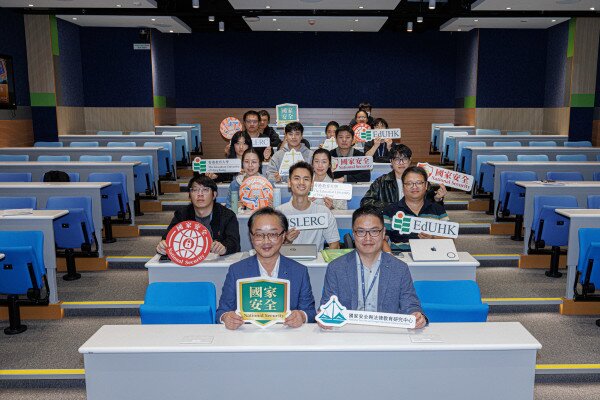
Against the backdrop of rapid advances in artificial intelligence and intensifying global technological competition, the National Security and Legal Education Research Centre of the Education University of Hong Kong hosted a lecture on “Artificial Intelligence and National Security,” delivered by Professor Zheng Ge of Shanghai Jiao Tong University. The lecture attracted strong interest from students and scholars concerned with technology policy, law, and national security.
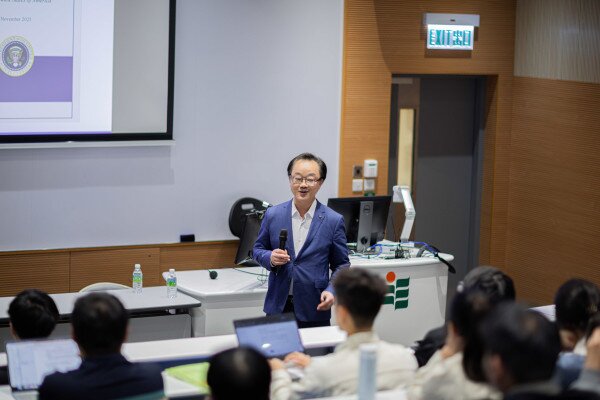
Professor Zheng emphasized that AI has become a strategic technology central to national competitiveness and security. Issues such as data sovereignty, algorithmic security, model transparency, and cross‑border regulatory coordination have emerged as key concerns, particularly amid heightened China–US technological rivalry. He noted that AI‑related risks extend beyond technical vulnerabilities to encompass institutional stability, social governance, and geopolitical dynamics.
The lecture examined multiple dimensions of AI governance, including the risks of cross‑border data flows, the implications of algorithmic opacity and model bias for public decision‑making, and the security challenges posed by AI deployment in finance and public administration. Professor Zheng argued that building a forward‑looking legal framework that balances innovation with security safeguards is essential for future governance.
He further highlighted HKSAR’s unique potential within the national digital strategy and the Greater Bay Area’s technological collaboration, positioning the city as a key hub for regulatory innovation and coordinated technology governance. The lecture concluded with a call for society to collectively address the profound transformations brought by AI and to work toward a secure, trustworthy, and sustainable digital future.